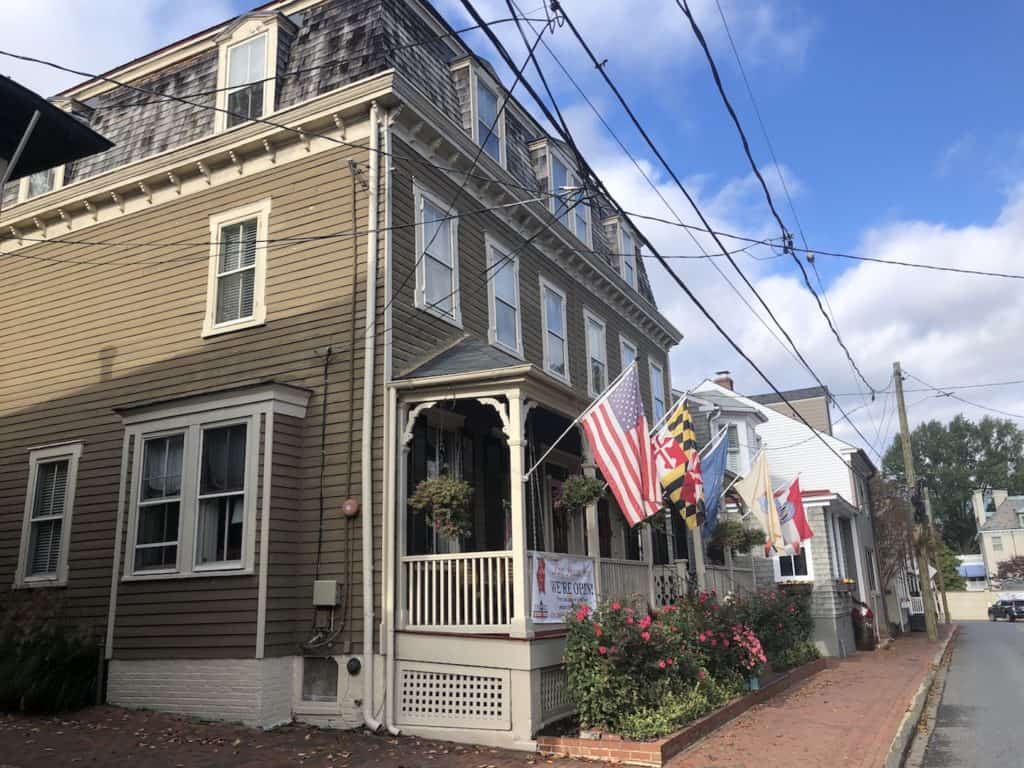
“Virginia is for Lovers.” That iconic slogan, created in 1969, still defines the state today. And truly, Virginia is for lovers of history, hiking, and wine—especially in Charlottesville.
First, Charlottesville sits in the foothills of the Blue Ridge Mountains. As a result, it offers stunning scenery in every season. Moreover, three of the nation’s first presidents once lived here. Therefore, the city overflows with early American political history.
In addition, Thomas Jefferson founded the renowned University of Virginia (UVA) here. Consequently, the city blends historic legacy with vibrant college-town energy.
Beyond history, the area invites you outdoors. For example, you’ll find numerous walking and hiking trails set in scenic, historic landscapes. Meanwhile, the surrounding countryside boasts dozens of wineries. Many offer award-winning wines, panoramic mountain views, and stories rooted in Virginia’s past.
Locals call it “C-ville.” However you say it, Charlottesville delivers charm, culture, and unforgettable experiences.
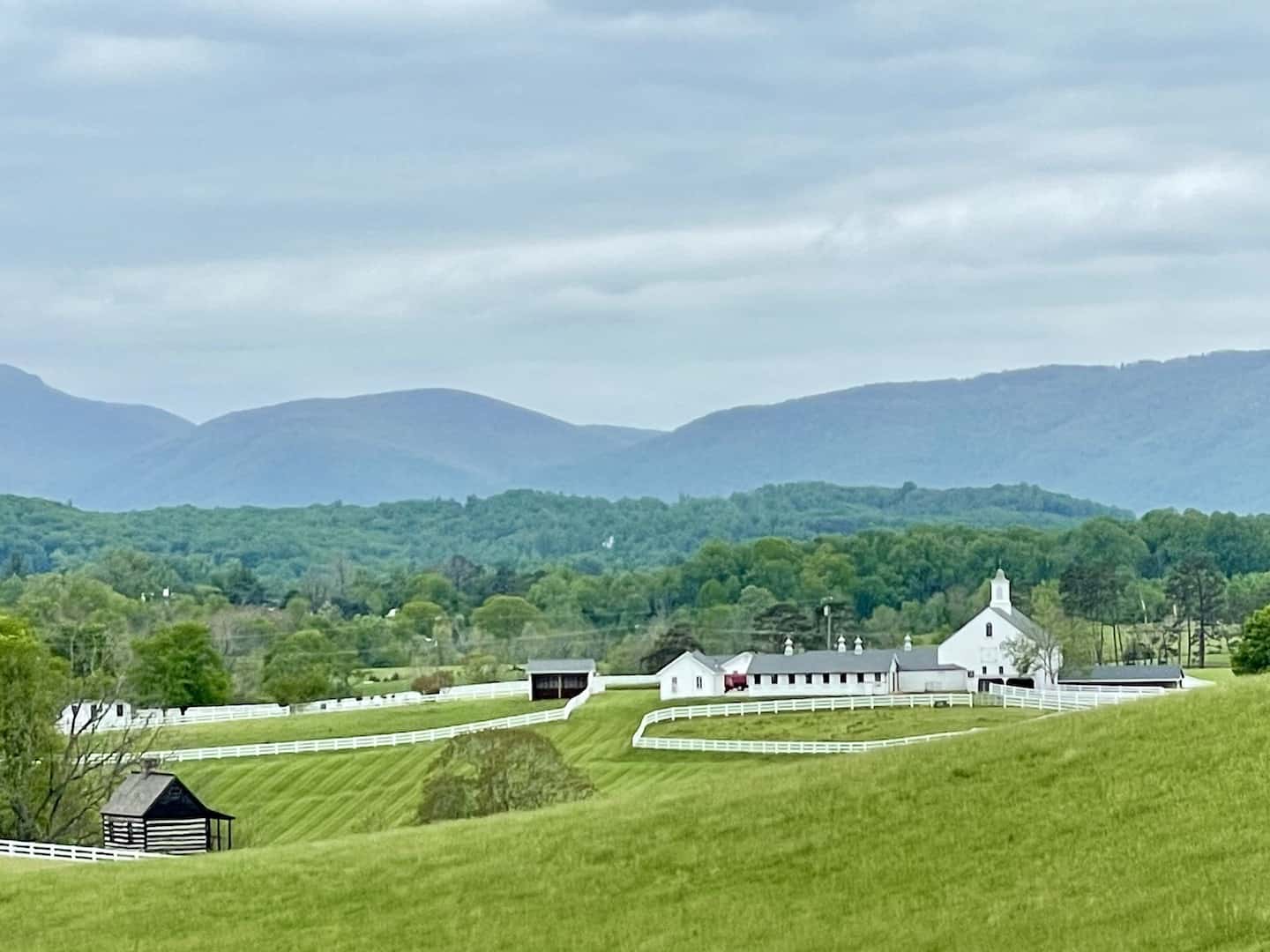
Charlottesville Itinerary
My husband and I have visited Charlottesville several times over the years. We’ve combined our love of history with exercise and relaxation on our visits. An itinerary that encompasses those three aspects when visiting C-ville are to:
- explore places rich in colonial history in the mornings,
- walk or hike on trails that offered interesting scenery, and
- sample a few wineries in the afternoon (and bought a few bottles to take home – our mementos from our trip) before enjoying a dinner out.
Charlottesville’s Historical Highlights
There are three historical homes in and around Charlottesville that once belonged to three of the country’s founding fathers. Thomas Jefferson built Monticello, and he encouraged his influential friends to consider building on properties nearby. (Centuries ago, before effective long-range communication developed, it would certainly be advantageous to have other like-minded colleagues nearby to share ideas and interests.) One of his contemporaries, James Monroe, did just that. Monroe actually became Jefferson’s next-door neighbor, and James Madison’s family home is only 30 miles away.
A visit to Charlottesville today offers visitors the opportunity to visit all three properties and learn more about the families who lived there, the enslaved who lived and worked there, friends and diplomats (like the Marquis de Lafayette) who visited, and more. In addition to the presidential homes is the University of Virginia (UVA), founded by Thomas Jefferson. He believed it important to create a public university to educate the citizenry – one in which faculty and students lived and learned together. UVA’s historical core is what Jefferson dubbed The Academical Village, and the impressive Rotunda is its crowning jewel.
The state boasts even more historical homes and sites. Less than 100 miles away lies Mount Vernon, George Washington’s home along the Potomac River just outside Washington, D.C. About 120 miles southeast of Charlottesville is Virginia’s Historic Triangle of Jamestown, Williamsburg, and Yorktown.
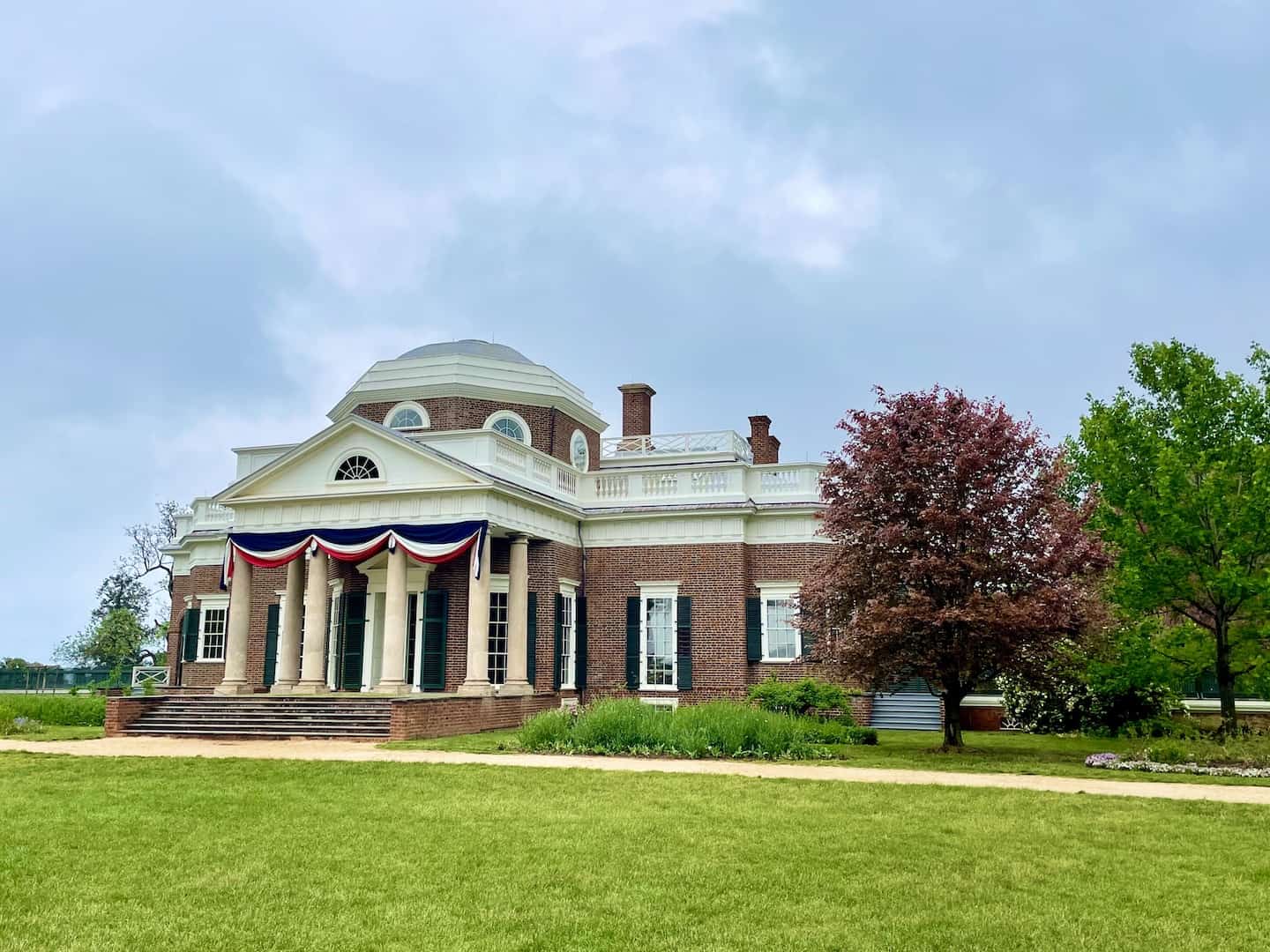
Thomas Jefferson’s Monticello
Just a few miles from downtown Charlottesville atop a mountain is the commanding Monticello. This was the 5,000-acre estate that Thomas Jefferson designed and added to over his lifetime. Jefferson began building his beloved Monticello from land once owned by his father. He was just 26 years old at the time. He incorporated ideas he’d seen on his travels to Europe in his home. A life-long learner, Jefferson tinkered with things to turn his inventive ideas into reality (like a revolving book stand and the Great Clock hanging in Monticello’s entrance hall that tells the time and day of the week). Also, he experimented with new horticultural ideas to improve the yields of his agricultural endeavors.
Who was Thomas Jefferson?
Jefferson is most well known as the author of the Declaration of Independence and the third president of the United States (1801-1809). As president, he might be best known for the Louisiana Purchase from France in 1803 — over 25% of today’s lower 48 states (in the United States). After the Louisiana Purchase, Jefferson sought to have the newly acquired land explored. The resulting Lewis and Clark expedition headed west to the Pacific Ocean, documenting what they saw and experienced along the way. In addition, he was a firm believer in the importance of education. He founded and played a large role in designing the University of Virginia (UVA) – particularly the Rotunda on campus.
Visiting Jefferson’s Monticello
Guided tours of the house run from April through October. Included in the ticket price are self-guided tours of the gardens and grounds. Additional specialty guided tours are available; for example, there are the “behind the scenes” as well as tours about the Hemings family, slavery, and the gardens. Purchase timed tour tickets online ahead of your visit to avoid disappointment when arriving. Plan on arriving about 30 minutes before your tour time to allow for enough time to park and ride the shuttle from the visitor center to the home. Alternatively, you can walk up (and back down) the 0.6-mile path to the house.931 Thomas Jefferson Parkway, Charlottesville | 434-984-9800
James Madison’s Montpelier
James Madison’s Montpelier is a historic home in a setting that reflected his family’s status. His father purchased the land and built a simple version of today’s house. James Madison had several additions built over the years after he inherited it following his father’s death. On guided tours, visitors enter the home, learn more about its history, and view some original furnishings.
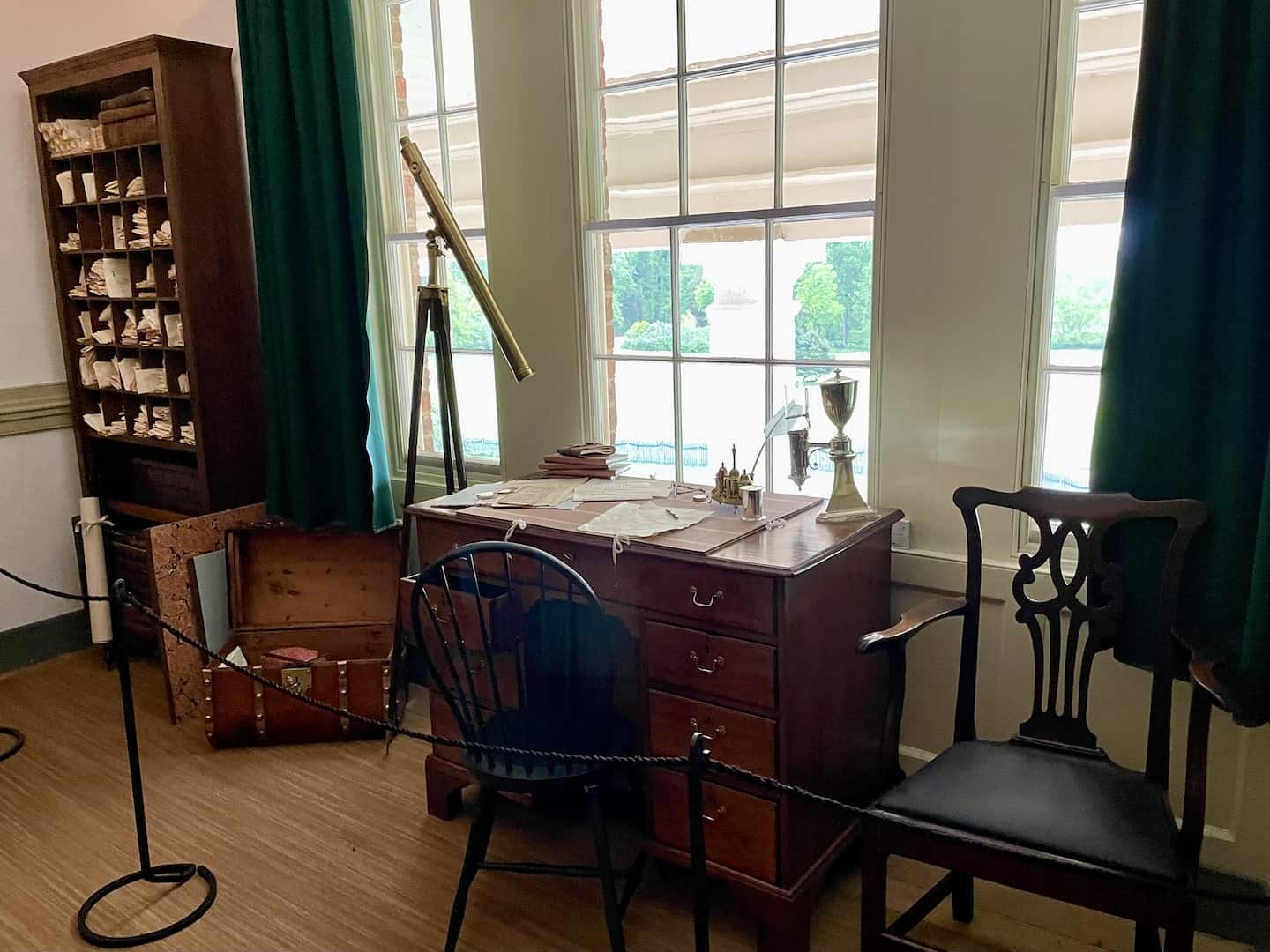
One major highlight of the house tour is the second-floor library. Here, James Madison sat at his desk beneath a window overlooking the Blue Ridge Mountains.
In this quiet room, he studied for months. He read leading philosophers. Then, he refined his ideas about the structure of a new nation. As a result, he helped shape key founding documents, including the The Federalist Papers and the United States Bill of Rights.
After touring the library, visitors can explore the outbuildings and exhibits. These displays highlight Madison’s legacy. At the same time, they tell the stories of the enslaved people who lived and worked on the property.
Who was James Madison?
Best known as America’s fourth president (1809–1817), James Madison earned the title “Father of the Constitution.” He championed the ratification of the U.S. Constitution and later shaped the United States Bill of Rights through powerful writing and debate.
At the same time, he defended states’ rights. However, he insisted the nation needed a strong federal government to survive. In addition, he advised George Washington and later served as Secretary of State under Thomas Jefferson.
Visiting Montpelier
Today, visitors can explore Montpelier, Madison’s historic estate in Virginia. First, take a one-hour guided tour of the house and grounds. Then, you can join a tour focused on the enslaved community that lived and worked there.
Prefer to explore at your own pace? Choose a Property Pass for a self-guided experience (note: it does not include the house tour). Afterward, walk the scenic trails, including paths through an old-growth forest.
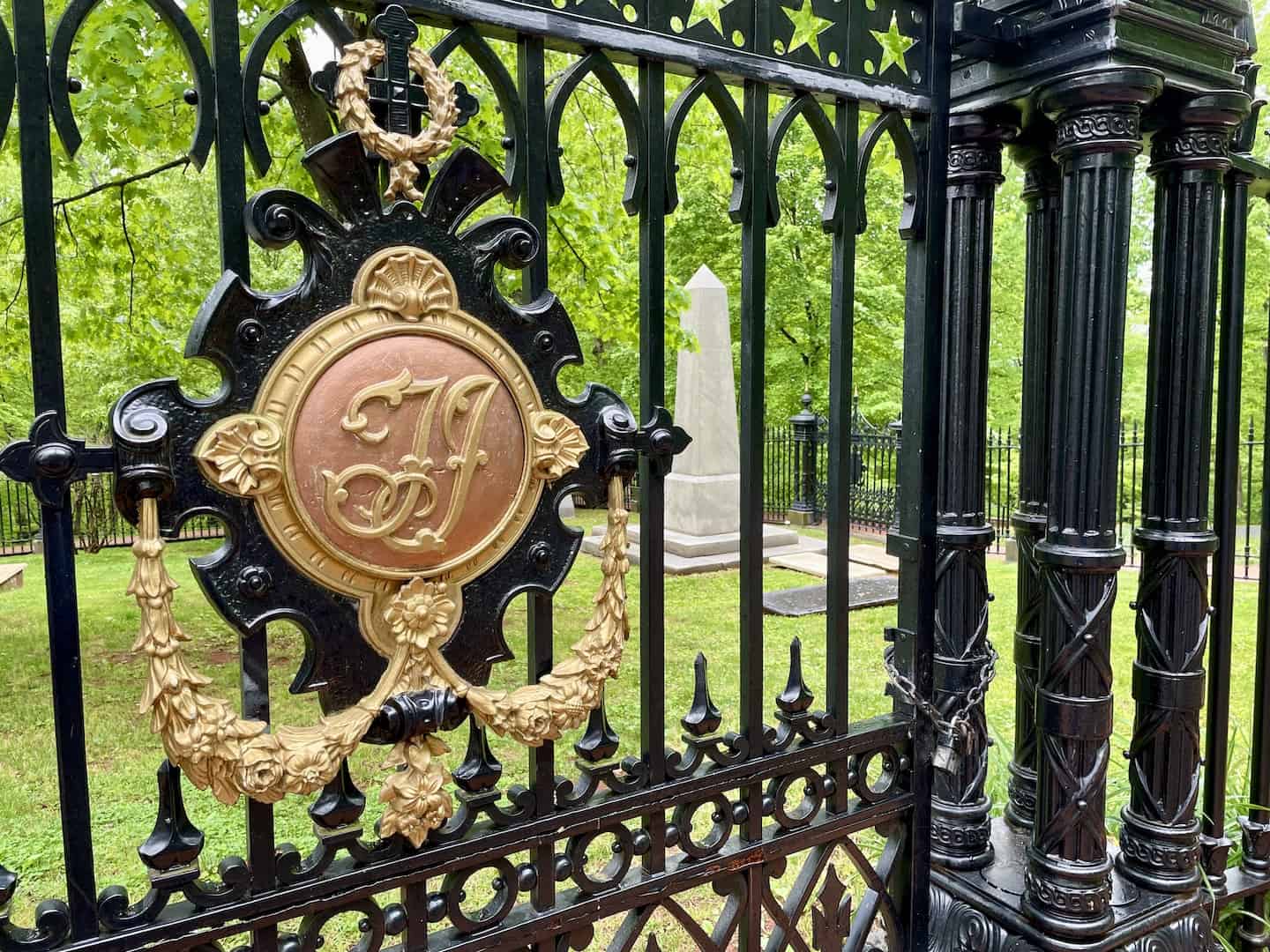
Finally, visit the on-site cemetery, where James and Dolley Madison are buried. Before you leave, stop by the café and gift shop in the visitor center on this expansive 2,650-acre property.. 11350 Constitution Highway, Montpelier Station, about 25 miles northeast of Charlottesville | 540-672-2728
James Monroe’s Highland
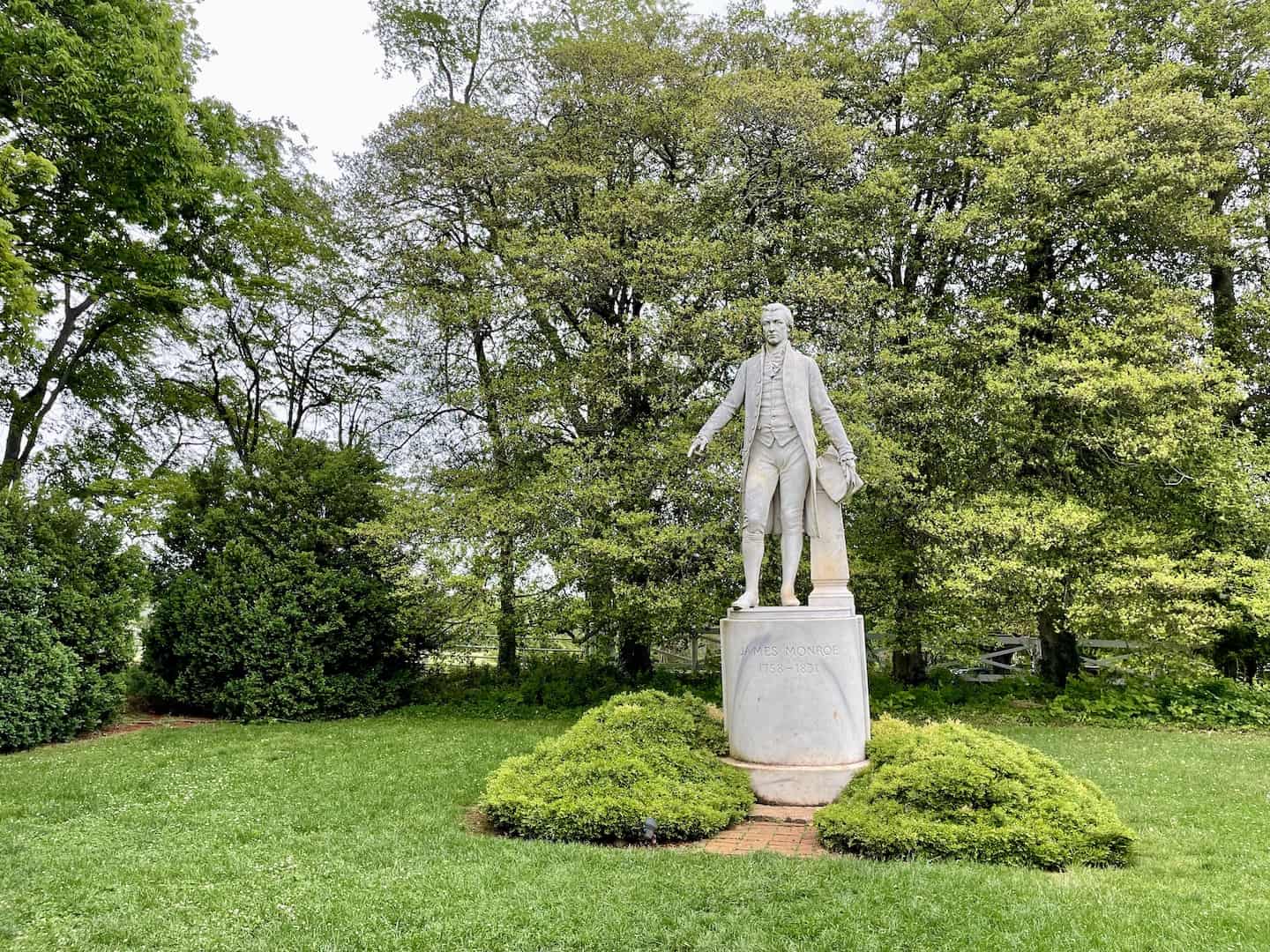
James Monroe purchased about 1,000 acres of this property in 1793 and made it his home in 1799. He and his family owned it for 25 years, and he named it Highland. Over the years, he expanded the size of the house and his land holdings – up to 3,500 acres at one time. However, after leaving his presidency, he sold his house and farmland in the 1820s to pay off his debts. Unfortunately, the main house was later destroyed by fire. Today there is a self-guided tour of Monroe’s guesthouse built in 1818 for visiting dignitaries. Inside the historically decorated guesthouse are numerous informational displays to help tell the story of the property and its most famous owner. In addition to the 1818 Guesthouse, there are several outbuildings and grounds that include walking/hiking trails.
Who was James Monroe?
James Monroe is well-known as being a U.S. diplomat to France, England, and Spain; Secretary of War during the War of 1812; and the fifth president of the United States (1817-1825). He is well-known for the “Monroe Doctrine,” which he articulated during one of his State of the Union speeches. Basically, Monroe told world leaders (particularly those in Europe) that the United States would not get involved in Europe, the U.S. would not interfere in existing European colonies in the Western Hemisphere, and no other nation could form a new colony in the Western Hemisphere. He died on July 4, 1831 – five years to the day after Thomas Jefferson’s death in 1826.
Visit Monroe’s Highland
Today Highland is a 350-acre property owned and operated by the College of William and Mary, Monroe’s alma mater. Walking/hiking trails are open to the public, free of charge. 2050 James Monroe Parkway, Charlottesville | 540-654-1043
University of Virginia
One of the highest competitive universities in the U.S., the University of Virginia (UVA), was founded by Thomas Jefferson in 1819. Many visitors enjoy stepping inside the Rotunda and Old Cabell Hall – two buildings that sit opposite each other on the north and south sides of The Lawn, the large grassy area that was the center of the university in the 1800s. Jefferson dubbed this area the Academical Village which, along with Monticello, became a UNESCO World Heritage Site in 1987.
UVA’s Historical Sites
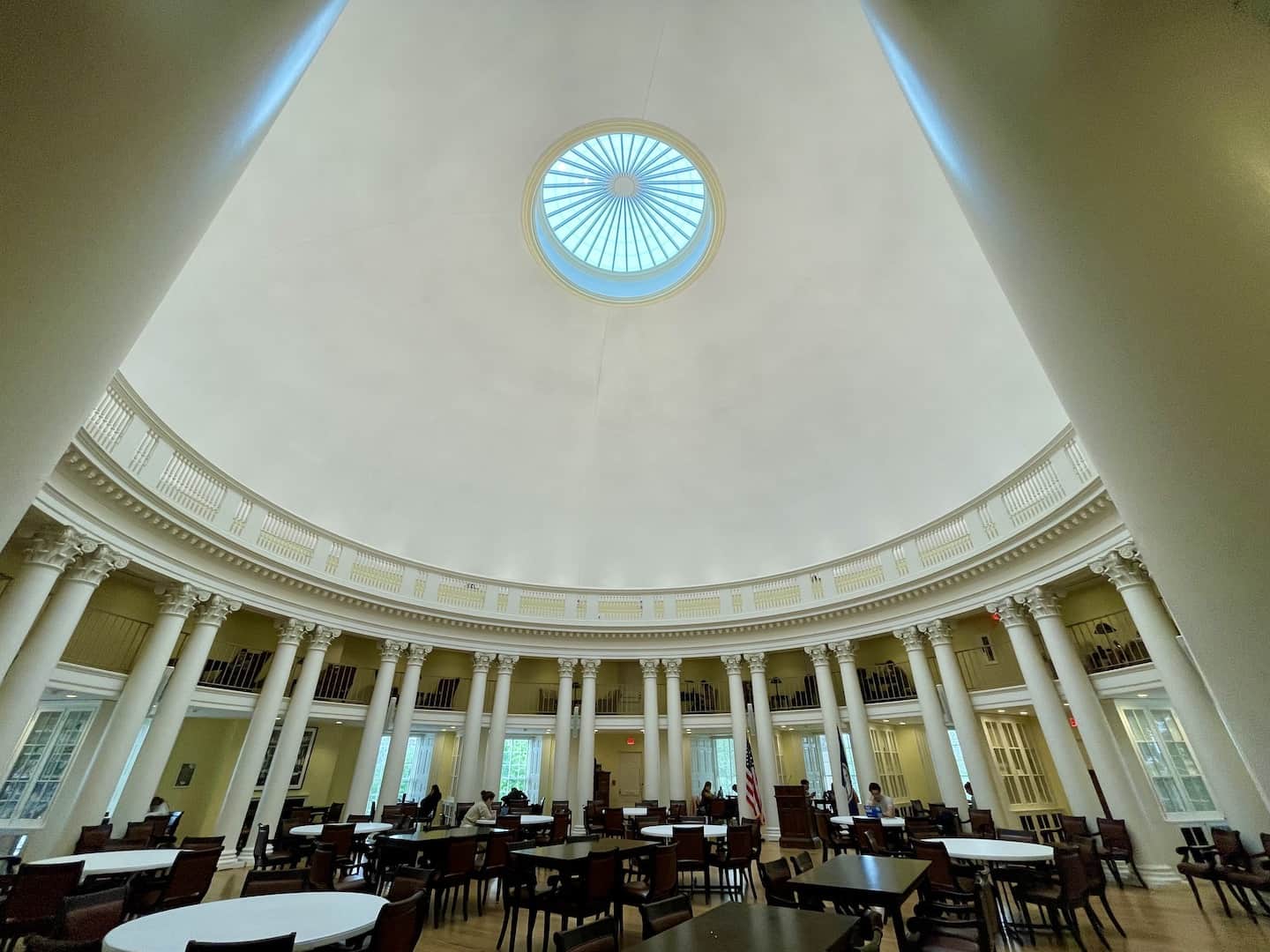
Thomas Jefferson designed the impressive Rotunda, modeled after the Pantheon in Rome, which measures 70 feet tall and 70 feet wide. Guided historical tours of the Rotunda are offered daily to the public during the academic year. If visiting at other times, pick up a brochure at the desk inside the Rotunda and take your own self-guided tour. Downstairs is an oval room with displays, artifacts, and an original chemical hearth used by faculty and students in the 1800s. On the main level is a life-size statue of Thomas Jefferson from 1861 that survived the disastrous electrical fire of 1895, which caused extensive damage to the building. Upstairs is the Dome Room with the large oculus (skylight), which housed the university’s original library. From the Rotunda, you can look across The Lawn and gain a view of Old Cabell Hall.
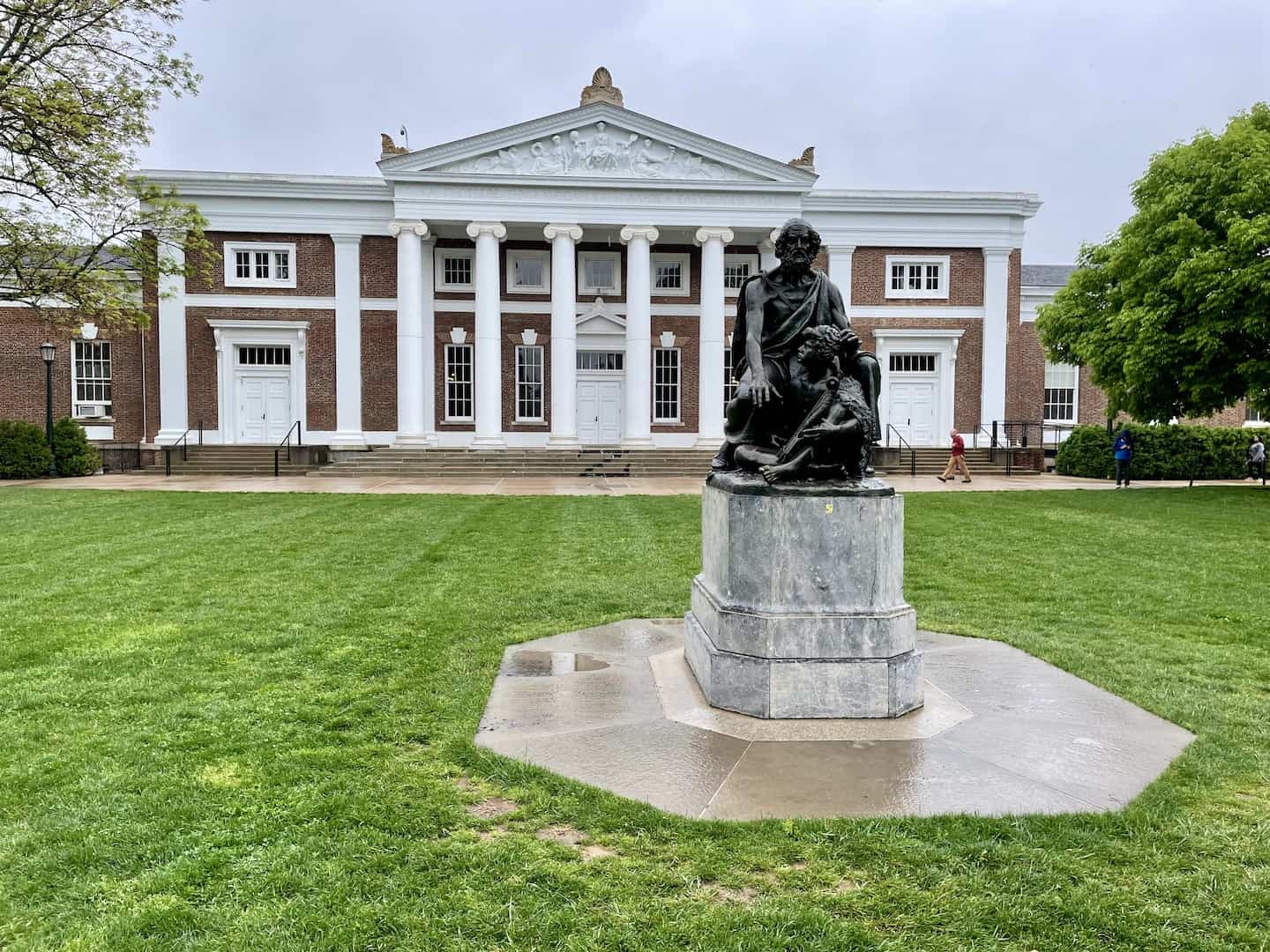
Another popular UVA building is Old Cabell Hall across The Lawn from the Rotunda. It houses the university’s music department and houses its lecture and performance hall. The pediment above its entrance is based on John 8:16: “Ye shall know the truth, and the truth shall make you free.” A statue of Homer sits in front of Old Cabell Hall.
Edgar Allen Poe’s Room at UVA
Along the West Range area of dormitories on McCormick Street – parallel to The Lawn, is Room #13, which is memorialized as the room Edgar Allen Poe, a student here in 1826, occupied. It is furnished as it might have been at the time of his residence here. Nearby on McCormick Street is the Chapel (built in the 1880s).
Fralin Museum of Art at UVA
Located a block from the UVA campus, the Fralin Museum of Art contains a wide variety of artifacts, European and American paintings from the 15th to 20th centuries along with photographs and sculptures. No admission is charged. 155 Rugby Road, Charlottesville | 434-924-3592
Top Charlottesville Trails
There are several great options for walking and hiking in Charlottesville. Choose a county park, Darden Towe Park, or one of the historical sites. Enjoy some scenic spots on foot – a perfect complement to a day of history and, perhaps, some relaxing wine tastings.
Darden Towe Park Trails
Northwest of downtown Charlottesville, Darden Towe Park offers several trail options. The Rivanna River Trail is a paved 4.3-mile out-and-back trail along the Rivanna River. Another popular trail is the 5.2-mile out-and-back Old Mill Trail.
James Madison’s Montpelier Trails
There are eight miles of trails (ranging from 0.3 to 3.55 miles) through meadows, horse pastures, and woodlands. Walk the Montpelier Loop to view the Madison Family Cemetery (where James and Dolley are buried), the Slave Cemetery, and the gardens. Other trails pass a pond, barns, and the archeological lab.11350 Constitution Highway, Montpelier Station | 540-672-2728
James Monroe’s Highland Rustic Trails
The Highlands Rustic Trails at James Monroe’s estate range from a .3 easy Inner South Pasture Loop to the 2.5 mile Mountain Trail with some steep inclines. They can be combined to offer an energetic workout. The trails are open to the public during regular operational hours at no charge. 2050 James Monroe Parkway, Charlottesville | 434-293-8000
Thomas Jefferson’s Monticello Trails
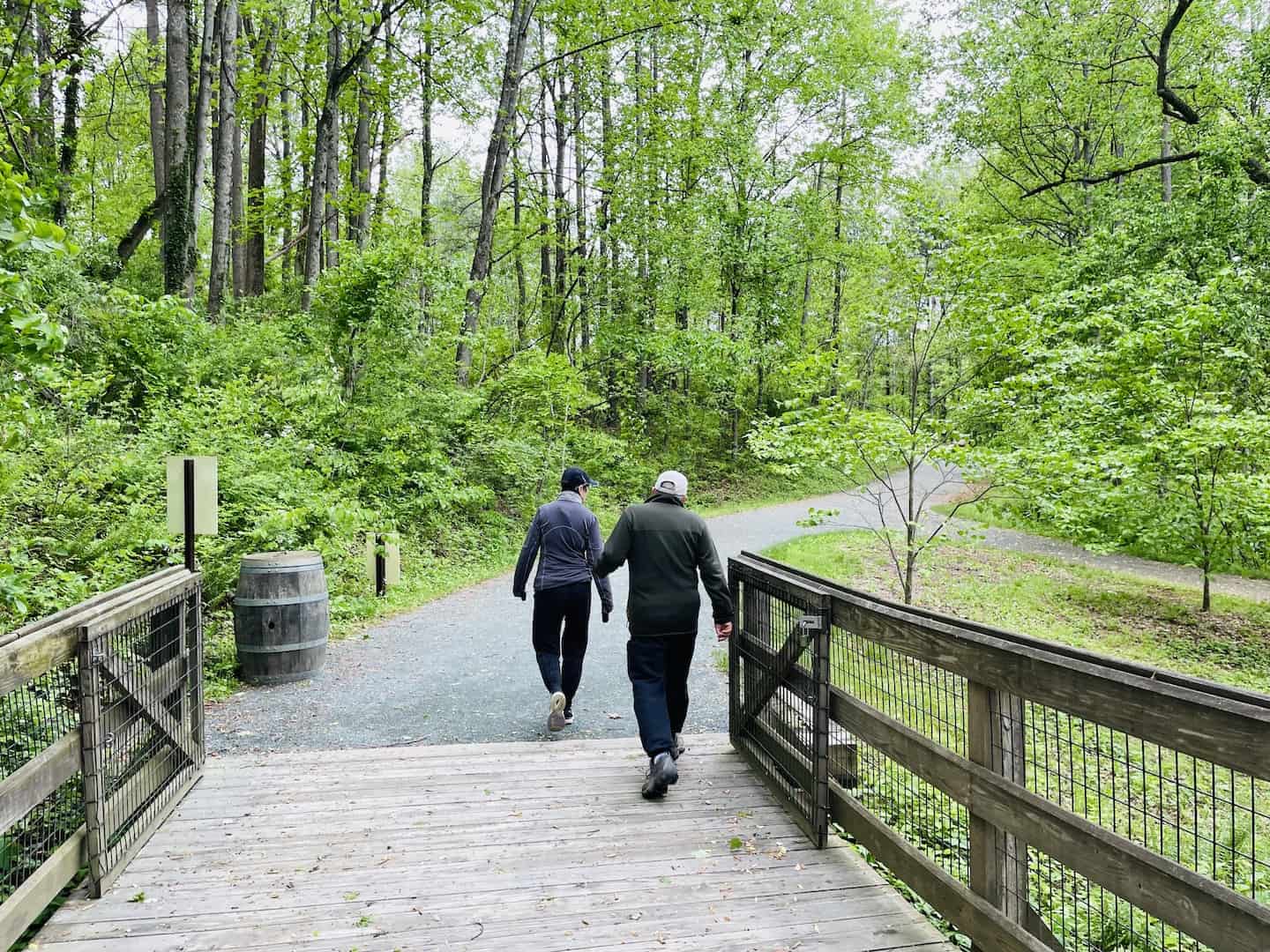
If it’s a nice day and you feel like stretching your legs, there’s a 4.3-mile out-and-back Saunders-Monticello Trail for an easy walk that begins near the visitor center. There are other trails to enjoy in the same area. Park at Monticello (which has restrooms and a cafe) or at the trailhead on Route 53, just off Route 20.
University of Virginia Walking Options
Soak up more history while stretching your legs on campus. (Maps are available at the Rotunda.) There are two great options to walk in a bit of history on campus.
- Take the historical tour of the Rotunda and then walk a loop around the area outside that made up Thomas Jefferson’s Academical Village. When departing the Rotunda, turn left to stroll the inside perimeter of The Lawn, passing the Pavilions and Lawn rooms (home to some lucky seniors!), peeking into the natural alcoves along the way, and taking a look at Old Cabell Hall. Returning on the other side of The Lawn, you’ll see more natural alcoves as well as more Pavilions and Lawn rooms. Head onto McCormick Road to Edgar Allen Poe’s room and the Chapel.
- Take the self-guided walking tour of the history of enslaved African Americans at UVA including those who toiled in making bricks used in building the Rotunda, Henry Martin who rang the chapel bells every hour for decades, and those who cooked and cleaned for faculty members. Visit the Memorial to Enslaved Laborers, commemorating the more than 4,000 enslaved people who worked at UVA; it’s located to the northeast of the Rotunda.
Top Charlottesville Area Wineries
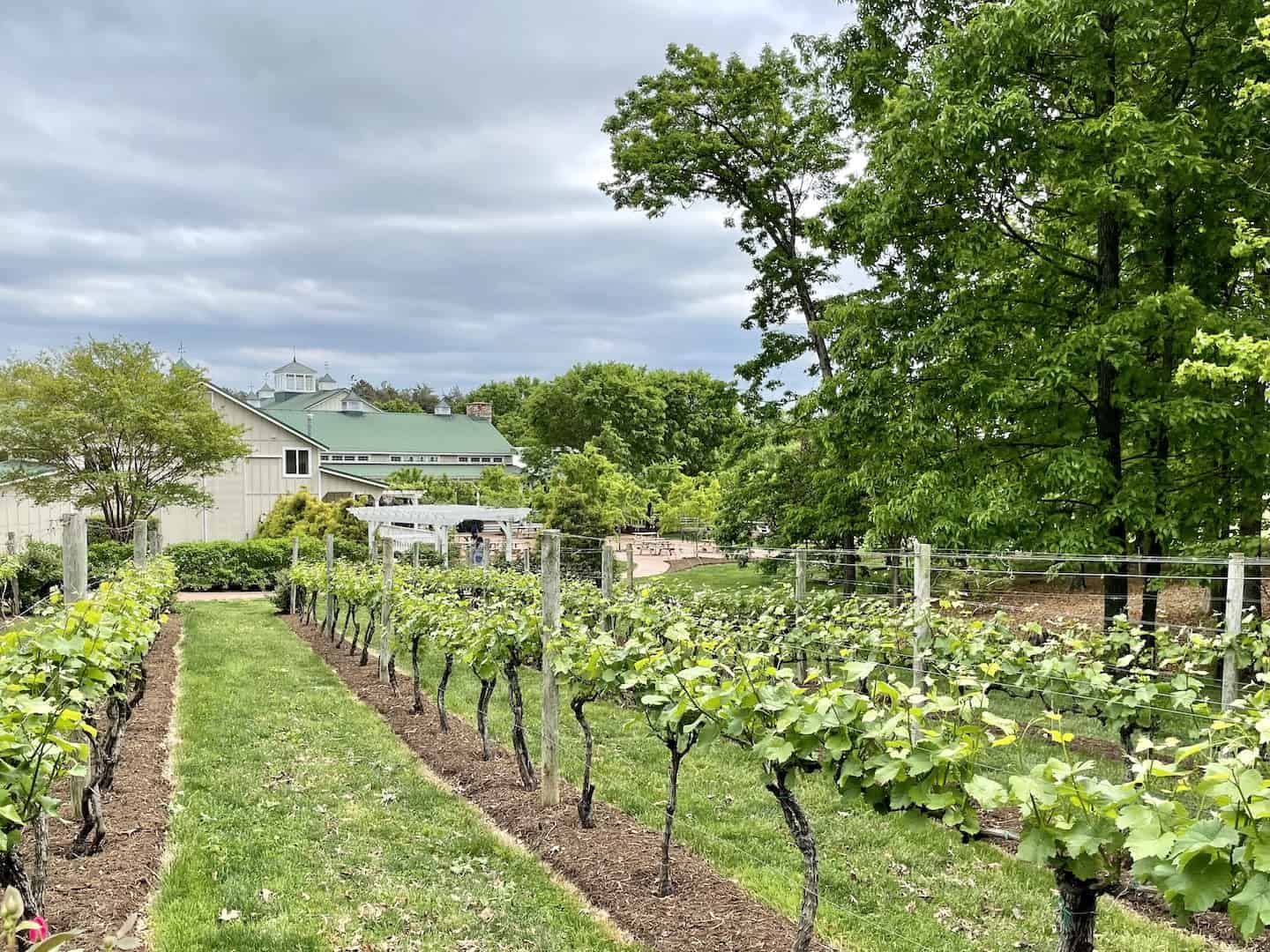
There are too many wineries in the Charlottesville area to visit during a short stay. The wineries I’ve listed are noted for their great vintages, of course. In addition, they provide very enjoyable visitor experiences.
The wineries differ in several key ways. First, some source all of their grapes on their property; others purchase them from nearby vineyards.
Second, some are smaller establishments (like Gabriele Rausse Winery, Jefferson Vineyards, Keswick Vineyards, Michael Shaps Wineworks, and Septenary) where you’re not likely to run into large groups of people. Others are larger and, therefore, might be busier, especially when featuring live music and other events.
Third, tastings can be personally guided or self-guided. I found the latter to be the norm in many of the ones I visited. That said, the self-guided tastings usually included either short videos to watch on a smartphone or printed information handed out with the wine. Fourth, two wineries (Barboursville Vineyards and Veritas Vineyard and Winery) have inns for guests.
Some Charlottesville Wineries to Consider
The ten wineries listed below are some of my favorites; each welcomes visitors by creating spaces to enjoy the wine, views, or other special features. Check out their websites, noting the days and hours of operation as well as upcoming special events to help you plan your visit. Some require reservations for tastings and are so noted on their websites. The Monticello Wine Trail website is a great source of information and includes a map you can create with the wineries you choose to visit. Read my detailed guide to these top wineries — along with more pictures, too.
The Ten to Try
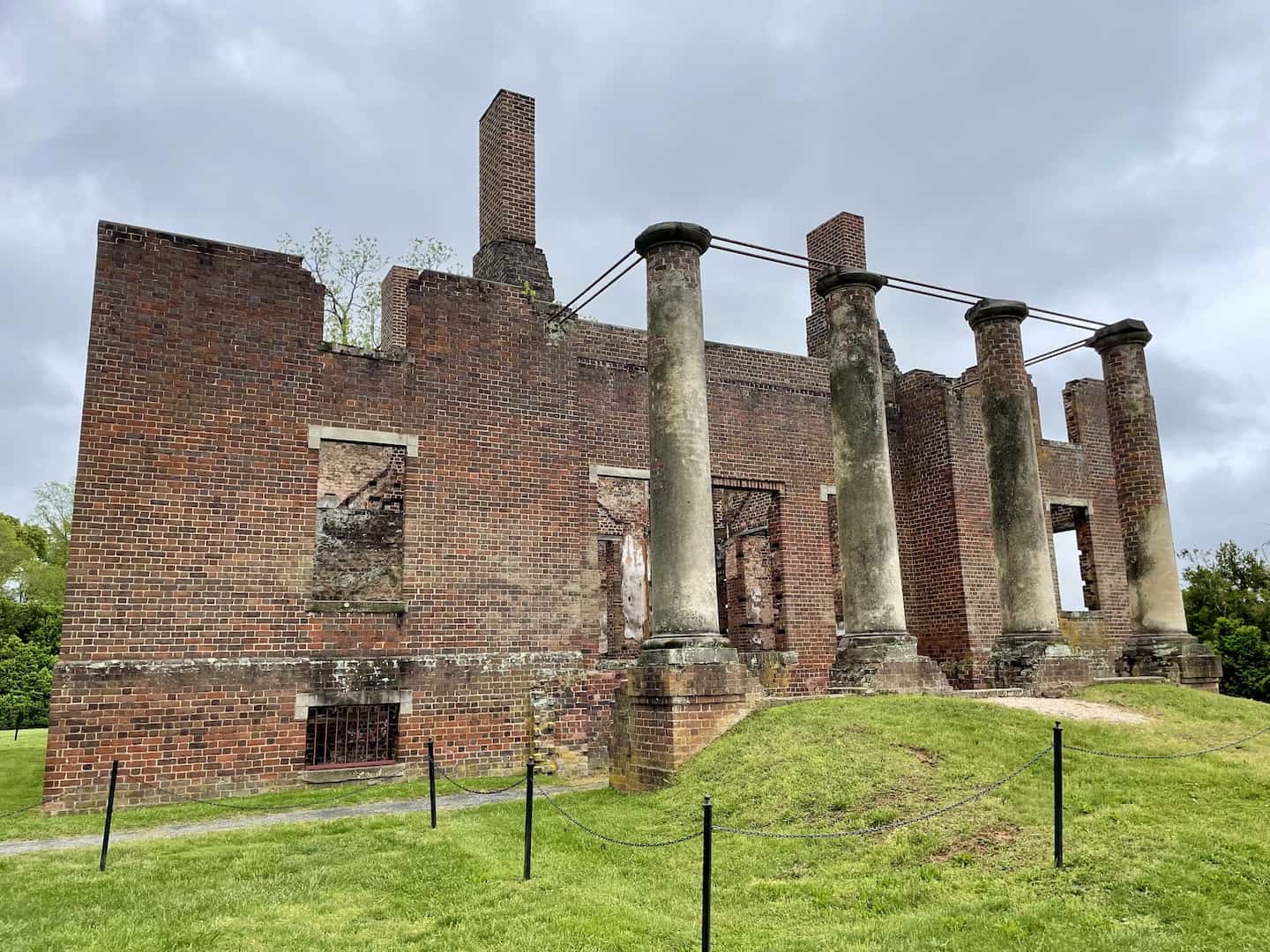
Barboursville Vineyards has ruins of an 18th-century house designed by Thomas Jefferson on its property. There is a self-guided tasting option (guests sample wines from dispensers) and a relaxing tasting experience in the Library (reservations required). 17655 Winery Road, Barboursville, north of downtown Charlottesville | 540-832-3824
Blenheim Vineyards, owned by musician Dave Matthews, has self-guided and guided tasting options. Reserve ahead for guided tastings. 31 Blenheim Farm, Charlottesville | 434-293-5366
Gabriele Rausse Winery is tucked in a cozy woodland setting. The tasting room is in a modern concrete and glass building. There are also tables and chairs located outside. You need to use GPS to find this place; there’s no sign on the road! 3247 Carters Mountain Road, Charlottesville | 434-981-1677
Jefferson Vineyards is close to Monticello, but it’s not associated with the Jefferson estate. It has personal tastings and indoor and outdoor seating. 1353 Thomas Jefferson Parkway, Charlottesville | 434-977-3042
Keswick Vineyard is located in a lovely area with winding roads and rolling land. It has outdoor seating (both covered plus uncovered) and offers live music on weekends. 1575 Keswick Winery Drive, Keswick (east of downtown Charlottesville) | 434-244-3341
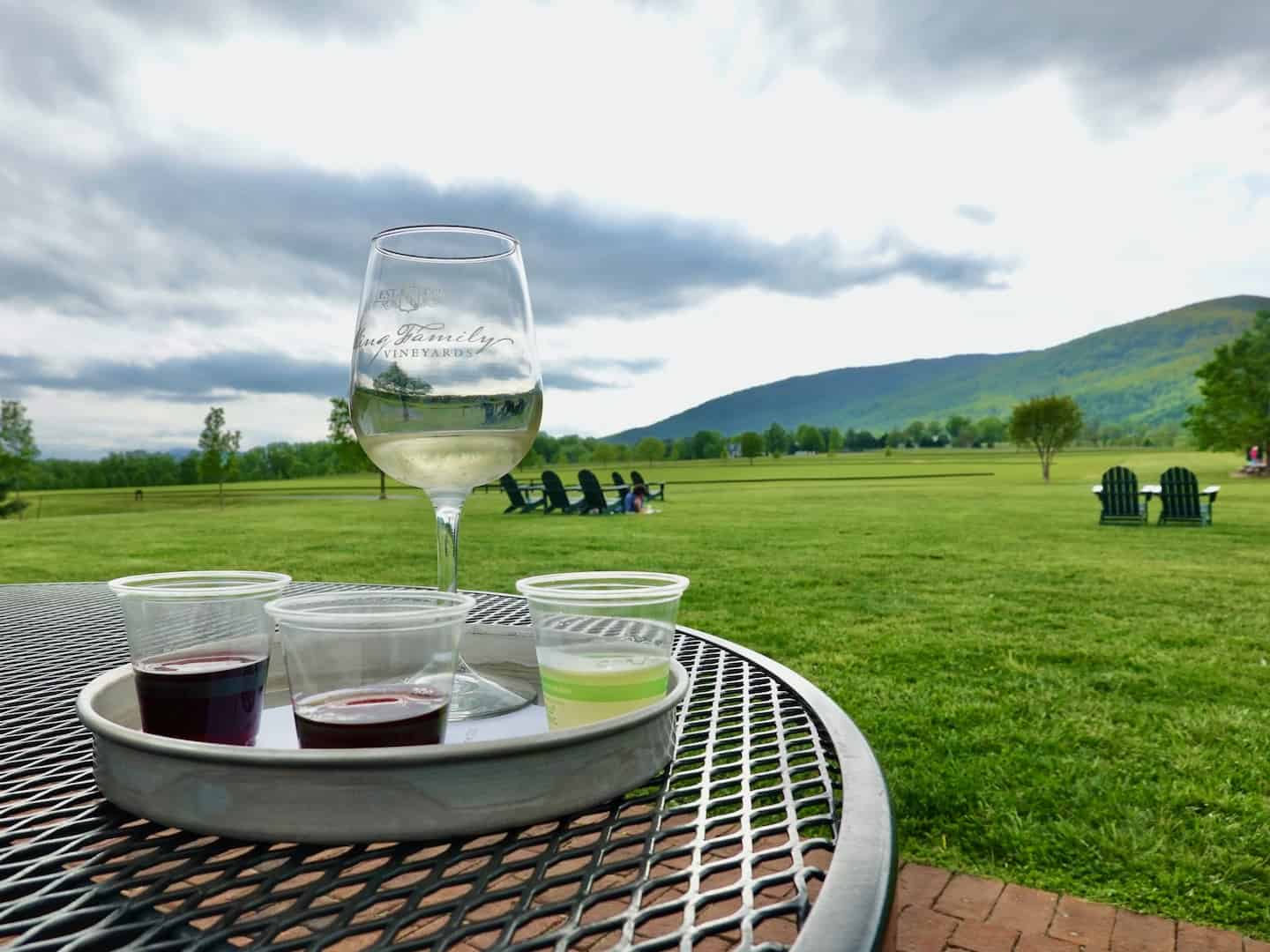
King Family Vineyards boasts expansive views of the Blue Ridge Mountains and the adjacent polo field. If you plan it right (most Sunday afternoons in the summer and early fall), you can enjoy your wines while watching a polo match. 6550 Roseland Farm, Crozet, west of Charlottesville | 434-823-7800
Michael Shaps Wineworks is perched on a hill, up a steep road, south of downtown Charlottesville. It offers personal tastings of the wine that Michael Shaps produces in Virginia as well as those created at his winery in France. 1781 Harris Creek Way, Charlottesville | 434-296-3438
Pollak Vineyards is located on a 98-acre property with indoor and outdoor (both covered and open-air) seating options. There’s a pond and nice views from the public spaces. 330 Newtown Road, Greenwood, west of Charlottesville | 540-456-8844
Septenary Winery is west of Charlottesville, and its tasting room was once a pool house for a previous owner. Unique! Sit inside or outside by the pool while sipping your choice of wine. 200 Seven Oaks Farm, Greenwood, west of Charlottesville | 434-996-6292
Veritas Vineyard & Winery offers several relaxed outdoor settings for guests, including an open-air brick patio, a large covered patio, and settings with Adirondack chairs clustered around fire pits. 151 Veritas Lane, Afton, west of Charlottesville | 540-456-8000
Charlottesville Location
Charlottesville is located in central Virginia, about 72 miles from Richmond; 120 miles from Washington, D.C., and Williamsburg; 180 miles from Raleigh, NC; and 250 miles from Philadelphia.
Where to Eat in Charlottesville
Three interesting downtown Charlottesville restaurants that provide appealing atmospheres along with delicious fare are:
The Local, constructed in 1912, has worn many hats: a shoe-repair shop, a general store, a pool hall, a motorcycle shop, a church, and a photography studio. Its culinary offerings boast products from nearby farms and are as interesting as its history. 824 Hinton Avenue, Charlottesville | 434-984-9749
Orzo Kitchen and Wine Bar has a lively vibe and delicious food featuring Mediterranean dishes and specialty cocktails. 416 West Main Street, Charlottesville | 434-975-6796
Tavern & Grocery has been a boarding house, tavern, and grocery store in its long history. In fact, it was the site of the first African-American business. Today Tavern & Grocery is a welcoming place that features creative dishes prepared with locally-sourced ingredients. 333 West Main Street, Charlottesville | 434-293-7403
Related Articles
Virginia & D.C.
- Charlottesville Trails: Take a Walk Back in History – Discover some inviting trails at historical estates — Thomas Jefferson’s Monticello, James Monroe’s Highland, James Madison’s Montpelier — and nearby parks.
- Charlottesville Wineries: Sensational Sips in Virginia’s Heartland – Visit one — or all — of the top ten wineries in the greater Charlottesville area.
- The Historic Triangle: Jamestown, Williamsburg, Yorktown
- Mount Vernon: A Detailed Guide to George Washington’s Home – President George Washington’s home and farm. In addition to a tour of his home, visitors can visit his gardens, tomb, farm, unique 16-sided barn, wharf, and numerous outbuildings that supported the property and those who lived here — including enslaved people.
- Norfolk – Close to Virginia Beach, Norfolk is lively with three top attractions: Chrysler Museum of Art, Nauticus Maritime Museum (with a retired U.S. battleship to tour), and the Norfolk Botanical Garden.
- One Week in Historical Virginia – Consider our itinerary for a fabulous visit to this special part of the state.
- 16 Best Monuments and Memorials in Washington, D.C. – Visit a few or all of these great monuments, including the most recent ones. Use this guide to plan your visit!
And don’t forget to check out my detailed guide to Charlottesville’s top wineries and great walking and hiking trails in Charlottesville!
Trip Planning
- 5 Travel Tips That Will Instantly Make Your Trips Easier
- Design Perfect Trip Itineraries — On Your Own or with AI
- Expert Tips for Traveling to Europe for More Fun, Less Stress
- How to Create Trip Photo Books to Make Your Travels Last a Lifetime
- How to Find the Perfect Vacation Home Rentals
- Must-Have Travel Apps & Sites
- Stay Powered Up: A Traveler’s Guide to Power Banks
- Travel Lightly: Top Ten Tips to Pack for Your Next Trip
- Wander without Worry: How to Plan a Great Trip
Final Thoughts
Charlottesville is a wonderful destination to soak up some of the United States’ colonial history as well as explore the many trails and wineries the area offers. A day visiting one of the historical homes (mentioned in this article), a walk, and a visit to a winery can be a day well-spent and enjoyed! If staying in downtown Charlottesville, you may want to visit the Downtown Mall, a pedestrian-only area, a tree-lined street with restaurants and shops.
Comments?
Feel free to share your thoughts and experiences from a visit to Charlottesville and/or the general area. 🙂