
Traveling through Europe offers a depth of experience that few destinations can match, where centuries of history, culture, and artistry are woven seamlessly into everyday life. From the cobblestone streets of Italy to the grand boulevards of France and the storybook villages of Belgium, Germany, and more. Each destination delivers its own distinct personality while sharing a collective reverence for heritage and tradition. My husband and I have traveled to Europe frequently, and we value the diversity of experiences from hectic, urban centers and the slower-paced life in small villages and hamlets. In this article, you’ll find details about trip planning tips, entry requirements, transportation choices within Europe, payment options, and practical suggestions.
Diverse Languages, Cuisines, and Landscapes
With more than 40 countries packed into a relatively compact region, Europe makes it easy to experience incredible diversity (e.g., its languages, cuisines, and landscapes) without the stress of long-haul travel between stops. Efficient rail systems like high-speed trains connect major cities and countryside escapes alike, offering a comfortable, scenic way to explore at your own pace.

Unified European Experiences
What unites these varied European destinations is a profound sense of history and preservation. Europe is home to hundreds of UNESCO World Heritage Sites, from ancient ruins and medieval castles to awe-inspiring cathedrals and architectural masterpieces. Beyond the landmarks, it’s the slower moments that leave a lasting impression, like lingering over a glass of regional wine in a sunlit piazza, savoring locally sourced cuisine crafted from generations-old recipes, or wandering through vibrant markets filled with fresh bread, cheese, and produce. Whether you’re drawn by art, food, history, or simply the joy of discovery, Europe offers a rich, immersive journey designed for travelers who value comfort, culture, and meaningful experiences.

How to Plan a Europe Itinerary
When planning a trip to Europe, one of the smartest strategies is to prioritize geography. Don’t try to see everything at once. Europe may look compact on a map, but travel time between regions can quickly eat into your itinerary.
Instead, if you’re planning a trip for a couple of weeks or more, cluster nearby countries to minimize transit stress and maximize your experience. For example, pairing Austria, Germany, and Switzerland makes sense because of their close proximity and efficient rail connections—think scenic routes through the Alps and easy city-to-city hops. Similarly, combining France and Belgium allows you to experience iconic cities like Paris and Brussels without long travel days, while Italy and Greece work well if you’re okay with a short flight and want a mix of history and coastal beauty.
A helpful tip: use high-speed trains where possible (like in France or Germany), and limit yourself to 2–3 countries for a 10–14 day trip to avoid burnout.

Choose Varied Travel Experiences
Equally important is mixing your experiences so your trip doesn’t feel rushed or one-dimensional. A well-balanced itinerary includes big cities, scenic countryside, cultural landmarks, and intentional time for relaxation. For example, you might start in a major city like Paris or Rome for museums, food, and energy, then transition to quieter countryside regions—like vineyards in rural France or lakeside towns in Switzerland—to slow things down.
Layer in cultural landmarks such as historic castles, cathedrals, or ancient ruins, but avoid stacking too many “must-see” sites back-to-back. A practical approach is to follow a “2–1 rule”: for every two busy sightseeing days, schedule one lighter day—whether that’s a beach afternoon in Greece, a café-hopping day, or simply wandering without an agenda. This not only helps you recharge but also makes the trip feel more immersive rather than exhausting.

Best Times to Visit Europe
- The best time to visit Europe really depends on what kind of experience you want, because the region spans multiple climates and cultures—but for most travelers, late spring (May–June) and early fall (September–October) strike the ideal balance. During these shoulder seasons, you’ll typically get milder weather, fewer crowds, and better prices compared to peak summer months.
- If you’re chasing warm beaches in southern regions, aim for June or September to avoid extreme heat and packed coastlines; for city-hopping and sightseeing, May and September offer comfortable temperatures for walking all day.
- Winter can be magical for holiday markets and snow-covered landscapes, but expect shorter daylight hours and colder conditions, especially in northern areas. A practical tip: always check regional weather patterns and local events before booking, as festivals or holidays can dramatically impact prices and availability.

Getting Into Europe
Check online or with your travel agent about current entry requirements. European countries have been rolling out several specific border security and traveler screening programs that will directly affect how visitors enter and move across the region. Check online, with your travel agent, or with your tour company to verify which pre-trip authorizations you’ll need.
1. EES (Entry/Exit System)
The European Union has been rolling out the EES (Entry/Exit System), which replaces passport stamping by digitally recording biometric data (fingerprints and facial images) for non-EU travelers. This happens at European airports as you enter. No pre-trip authorizations are required.
2. ETIAS (European Travel Information and Authorization System)
Alongside this, however, 30 European countries will initiate the ETIAS (European Travel Information and Authorization System) in 2027. This requires visa-exempt travelers (including citizens from the U.S., UK, Canada, and Australia) to apply online before arrival, pay a small fee, and undergo a security screening, similar to systems used by countries like the U.S. (This program’s implementation has been delayed for several years, so check if it’s in operation for your trip.
3. ETA (U.K.’s Electronic Travel Authorization)
The United Kingdom has the ETA (Electronic Travel Authorisation), which requires pre-approval for travelers who previously did not need a visa, adding an extra step before boarding flights.
Getting Around Europe
Getting around is easier than many visitors expect. Europe’s public transportation systems are reliable, clean, and cost-effective. Metro systems in cities like Paris or Berlin are often the fastest way to get around. For convenience, download Uber, Bolt, or local ride-sharing apps (also G7 in Paris) before you leave home, and use contactless payment where available.
On Foot
European cities were built long before cars. Streets in historical cites are narrow, charming, and often cobblestoned. Fortunately, they are usually highly walkable, but you’ll average far more steps than at home. Comfortable shoes are non-negotiable.
Rental Cars
Renting and driving a car in Europe is one of the best ways to unlock a more flexible, personalized travel experience—especially if you want to go beyond the major cities. While trains and flights connect popular destinations, having your own car lets you explore hidden gems, small villages, and scenic countryside routes at your own pace. Imagine driving through the rolling hills of Tuscany in Italy, road-tripping along the coast in France, or stopping at alpine viewpoints in Switzerland whenever you like—no schedules, no crowds. It’s often more cost-effective for couples, families, or small groups, especially when splitting rental and fuel costs.
Prepare for Driving in Europe
For first-time travelers, the key is preparation: book your rental car in advance for better pricing, choose an automatic transmission if you’re not comfortable driving a manual (common in Europe), and check whether you need an International Driving Permit, depending on the country. Also, familiarize yourself with local road rules, toll systems, and parking restrictions before you go. Check ahead with your lodging (e.g., hotel, short-term rental), letting them know your intentions and checking on parking options. Obey all speed limits and do not drive in restricted city center areas that are marked with signs; these areas are meant for local, registered vehicles only.
Read more in my articles, Top 10 Tips for Renting a Car in Europe and Driving in Europe: What You Need to Know.

Subways & Buses
Taking public transportation, like subways in Europe, is one of the fastest, most affordable, and easiest ways to navigate major cities. Systems like the Paris Metro, London Underground, and Rome Metro are extensive, reliable, and designed to get you close to top attractions without the hassle of traffic. Expect clear signage, frequent trains, and a mix of locals and tourists, particularly during rush hours. To get started, purchase a day pass or reloadable transit card; it’s often cheaper than buying single tickets.
Use apps like Google Maps or Citymapper to plan routes in real time, and always check the final stop of the line to ensure you’re heading in the right direction. Keep your ticket handy, as many systems require validation before entering, and random checks can happen. For a smoother experience, avoid peak commute times when possible, stand to the right on escalators, and stay aware of your belongings in crowded cars. Once you get the hang of it, using the subway feels less intimidating and more like a local advantage than a travel hurdle.
Public buses are another option while exploring a city. However, they may not be the fastest choice since they can get stuck in traffic.
Ride-Shares
For convenience, download ride-sharing apps like Uber or Bolt (or local ride-sharing apps like G7 in Paris) before you leave home, and use contactless payment where available. Check online or with your travel agent about the best ride-sharing options in the cities you’ll be visiting. For instance, in some cities, like Paris, G7 taxis are the preferred, faster option because they are allowed in bus lanes, while Uber is not.
Trains
Europe’s rail network connects countries seamlessly. If you plan to travel between cities, look into high-speed trains—they’re often faster and less stressful than flying when you factor in airport time. Expect punctual trains, easy travel between city centers, and some scenic routes (especially in Switzerland).
Flights
Budget airlines also make cross-continent travel affordable.
Immersing Yourself in Experiences
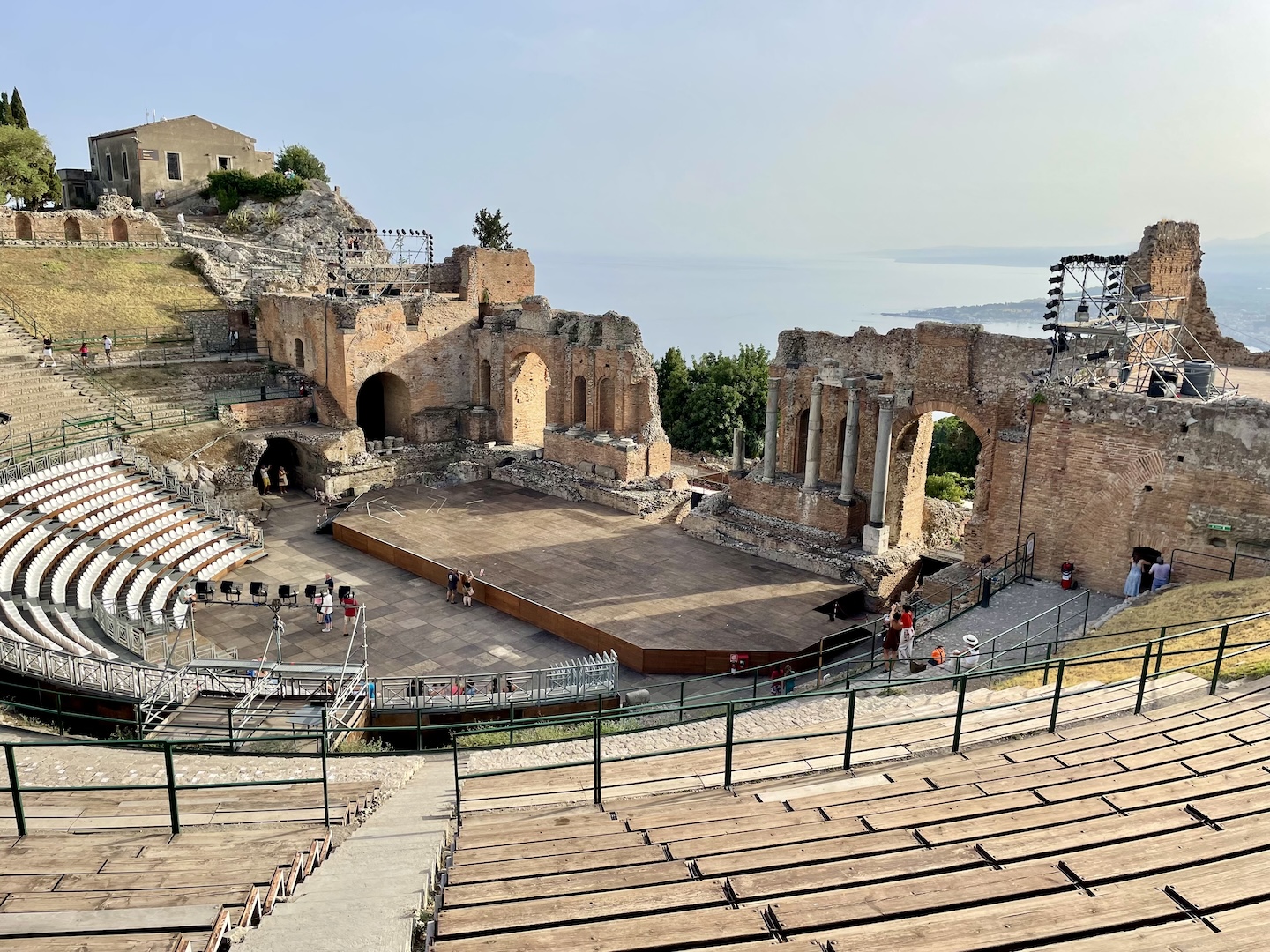
In Europe, history abounds! You may walk past Roman ruins on your way to dinner or see Gothic cathedrals towering over urban areas. Layers of history and UNESCO World Heritage Sites coexist with contemporary culture. Beyond history, there are recreational options (e.g., hiking, biking, skiing, boating) as well as opportunities to explore regional food specialties and to take wine/beer/liquor tours and tastings.
The Benefit of Guided Tours
One of the best ways to soak in a city’s history and culture is to take guided tours. Doing so helps us learn more about a place and acquaints us with the lay of the land. A bonus is that we often get helpful suggestions for good eateries and less well-known places to spend our free time.
My husband and I look for small guided tour options (e.g., 2-16 people), as we prefer not to be in a group of 50 traipsing through a city. I research tours while I plan our trips. Typically, I plan for a guided walking tour on the first morning of our trip. My husband and I have taken dozens of city walking tours, but we’ve also enjoyed more specialized options, like walking food tours (a guided walk through a neighborhood, stopping to taste local flavors), hikes through vineyards and olive tree groves outside San Gimignano, Italy, and dog-sledding and snowmobiling tours in Finland.

Cultural Differences Are Real
Every country has its own rhythm. And understanding this enhances your experience. For example, in Southern Europe (Italy, Greece), life moves more slowly, in Germany and Switzerland, punctuality is sacred, and in Nordic countries like Finland, privacy and personal space are highly valued.
Dining Is an Experience
Meals are slower and more intentional than you might be accustomed to. You won’t be rushed out of restaurants. Some people like to book restaurants ahead of their trip. My husband and I often look for a restaurant close to where we happen to be when our bodies tell us it’s time for a meal. I pull up Google Maps (or another travel review site) and see what well-rated options are in the area.
What to Expect When Dining
- Water is often not free, unless it’s tap water, and ice may not be offered.
- Refills on soda and other non-alcoholic beverages are not usually free.
- Bread may appear on the table and be charged.
- Tipping customs vary by country. Research tipping suggestions for the country you’re visiting. For example, in the U.S., tipping 20%+ for good service is typical. For some European countries, rounding up a bill to the nearest Euro or two is the custom.

Essential Europe Travel Tips
1. Check Your Passport’s Expiration Date
Traveling to Europe is exciting—but the small details can make or break your trip. Start with your passport. Many European countries require that your passport be valid for at least 6 months beyond your return date. Don’t assume you’re fine. Check it early, and if it’s close to expiring, renew it well in advance to avoid last-minute stress.
2. Understanding the Schengen Area
The Schengen Area is a 29-country, passport-free travel zone in Europe that acts as a single jurisdiction for international travel, abolishing internal border checks. It includes 25 EU states (such as Austria, Belgium, France, Germany, Italy, Spain, Poland, Portugal, the Netherlands, Sweden, and Greece) plus Iceland, Liechtenstein, Norway, and Switzerland. The Schengen Area allows you to travel between countries without border checks, but there’s a catch. You can only stay for up to 90 days within a 180-day period. For first-time travelers, this usually isn’t an issue, but it’s important to know so you don’t accidentally overstay, especially if you’re planning a longer trip or visiting multiple countries.

3. Book in Advance
Timing and booking strategy matter more than you might expect. If you’re traveling during peak summer (June–August), book your hotels, trains, and major attractions well in advance—ideally 2–4 months ahead. Popular sites like the Louvre Museum or the Colosseum often sell out days (or weeks) ahead. A smart move: make a shortlist of your “must-see” attractions, check when tickets are released, and book timed entry slots early. This saves you from long lines and the disappointment of sold-out shows.
4. Be Aware of Pickpockets and Scams
While exploring, stay aware of your surroundings—especially in crowded areas. Pickpocketing is common in major cities and transit hubs. Use anti-theft bags, keep valuables zipped and close to your body, and avoid putting anything important in back pockets. Picture this: you’re watching a street performer, fully distracted, when someone nearby takes advantage of the moment. It happens more than people expect.

5. Consider Travel Insurance
Travel insurance isn’t glamorous, but it’s essential. Delayed flights, lost luggage, or unexpected medical issues can quickly turn into expensive problems. A good policy can cover cancellations, emergencies, and more. Many experienced travelers consider it non-negotiable—especially for international trips where healthcare systems and costs may differ from what you’re used to.
6. Pack for the Trip & Track Your Luggage
Packing smart will save you daily frustration. Even if the forecast looks predictable, Europe’s weather can vary significantly by region and elevation. Mornings might be cool, afternoons warm, and evenings chilly—all in the same day. Bring layers you can easily add or remove, and wear comfortable walking shoes—you’ll likely walk more than you expect, especially on cobblestone streets.
Location Trackers Help
Part of your packing routine should be to tuck a location tracker (e.g., Apple AirTag or Android Tile) into your checked luggage and your carry-ons, such as purses, backpacks, and camera bags. Having location trackers allows you to monitor the location of all your items at all times. For example, with a location tracker, your phone will notify you if you accidentally leave your purse or backpack at a café or taxi. It can also tell you exactly where your checked luggage is – if it didn’t make it onto your plane.
Incidentally, most large airlines provide status updates on your checked luggage through their app, so you know when it’s been scanned at the airport, loaded onto the plane, and on its way to the luggage carousel.
7. Plan for Some Closures
It’s also important to plan for cultural differences, like Sunday closures. In many parts of Europe, especially smaller towns, shops and even restaurants may close on Sundays or operate on limited hours. Stock up on essentials the day before, and use Sundays as a slower travel day—perfect for sightseeing, nature, or a relaxed meal.
Likewise, many museums and other popular sites may be closed on Mondays. Check online for the places you plan to visit to verify days and hours of operation as you plan your daily itineraries.

8. Paying for Things
Many European restaurants and shops accept contactless payments, using credit cards, debit cards, and digital wallets (e.g., Apple Pay, Google Pay, PayPal), even for small transactions. Mastercard and Visa are widely accepted (though American Express and Discover are not).
Using Cash in Europe
Twenty-one European Union (EU) countries use the euro as their currency. They are Austria, Belgium, Bulgaria, Croatia, Cyprus, Estonia, Finland, France, Germany, Greece, Ireland, Italy, Latvia, Lithuania, Luxembourg, Malta, the Netherlands, Portugal, Slovakia, Slovenia, and Spain. Some non-EU countries also use the euro: Andorra, Kosovo, Montenegro, Monaco, and Vatican City. The rest of Europe uses its country’s native currency. Euros come in €0.01 to €2 coins and bills ranging from €2 to €200.
You’ll want to have some cash and coins handy for quick transactions, to pay for public restrooms (usually €0.50 or €1.00), or for tipping (e.g., tour guides, servers). You’ll find plenty of ATMs throughout Europe. For the lowest transaction fees and favorable exchange rates, use bank-owned ATMs, rather than independent ATMs. Also, when faced with the option to use the local currency conversion rate or the currency of your home country, always choose the local currency rate. Don’t forget to notify your bank of your travels; some still require notification before using your debit card abroad.

9. Take Electrical Adapters
Don’t overlook the basics: most European countries use Type C or F plugs, so bring a universal adapter to keep your devices charged. If you’re traveling with multiple electronics, consider a compact power strip so you can charge everything at once from a single adapter.
10. Familiarize Yourself with European Conventions and Phrases
It’s always a good idea to understand another country’s conventions, and Europe has a few that might surprise first-time visitors. First, the second floor of the building is counted as the first floor, and the ground floor is 0. Consider this when booking a hotel or short-term rental. Second, the date is typically written as day/month/year, so November 12, 2026, is written as 12/11/26. Third, commas and decimals are used in opposite ways when referring to money. For example, something costing 3.50 euros appears as €3,50. And, something costing 1,500 euros is written like this: €1.500. Fourth, Europe uses the metric system, so they measure temperature in Celsius (not Fahrenheit) and kilometers (not miles).
Local Language Boost
Respect for another’s culture is paramount for a traveler. Learning a few phrases like hello, please, thank you, good morning, and good night is essential for establishing a good rapport with others. This does not mean you need to be fluent. It simply means that you should make an attempt in the local language. Just attempting makes a good impression! Use Google Translate or another translation app to help you learn common phrases; it can also help you translate menus, information signs, and more. Read my article on the Google Translate app as well as other go-to travel apps.
Even More Travel Tips!
Read my articles about Expert Tips for Travel to Europe for additional information. Additionally, read more trip planning and destination-focused articles, listed below.
Related Articles
Trip Planning
- 5 Travel Tips That Will Instantly Make Your Trips Easier
- Design Perfect Trip Itineraries — On Your Own or with AI
- Expert Tips for Traveling to Europe for More Fun, Less Stress
- How to Create Trip Photo Books to Make Your Travels Last a Lifetime
- How to Find the Perfect Vacation Home Rentals
- Must-Have Travel Apps & Sites
- Stay Powered Up: A Traveler’s Guide to Power Banks
- Travel Lightly: Top Ten Tips to Pack for Your Next Trip
- Wander without Worry: How to Plan a Great Trip
Europe
Selected articles about places to visit in Europe are shown below. For a full list, please visit my website homepage.
AUSTRIA
BELGIUM
DENMARK
EUROPEAN CRUISES
- Best Sights to See on Viking’s Grand European Tour River Cruise
- Complete Guide to a Viking River Cruise
- Ultimate Guide to Viking Ocean Cruises
- Viking’s Empires of the Mediterranean Cruise Excursions
FINLAND
FRANCE
- Bordeaux: The Beautiful Capital of a Historic French Wine-Producing Region
- Colmar, France: How to Experience its History, Culture, and Charm
- French High-Speed Trains: Tips for Your First TGV Ride
- Paris Unlocked: Expert Travel Tips for Visiting the City of Light
- Paris: Why Paris is So Walkable: Haussmann’s Lasting Legacy
- Southwest France: Best Day Trips from Sarlat
- Southwest France: Saint-Emilion, An Enchanting Medieval Village
- Southwest France: Sarlat, France, A Marvelous Medieval Town to Explore
- Southwest France: Spend a Day Exploring Fascinating Châteaux and Gardens
- Southwest France: View Unique Prehistoric Cave Art
GERMANY
- Berchtesgaden, Germany: Kehlsteinhaus (“Eagle’s Nest), Germany, A Unique Experience with Impressive Mountaintop Vistas
- Munich, Germany: The 5 Best Things to Do and See
- Munich, Germany: Nymphenburg Palace, A Must-See Munich Treasure
- Munich, Germany: Residenz Palace, Bavarian Opulence on Full Display
GREECE
- 8 Top Places to Visit in Rhodes, Greece
- A Guide for 2 Weeks in Greece
- A Visitor’s Guide to Crete
- Driving Tips for Greece
- Kókkini Porta Rossa: Best Place to Stay in Rhodes, Greece
- Top 6 Things to Do in Santorini
IRELAND
ITALY
- Driving the Beautiful, Scenic SR 222 from Florence to Siena, Italy
- Exploring an Agriturismo and Its Wine in Piedmont
- Monteriggioni, Italy: the Medieval Tuscan Hilltop Town that Time Forgot
- Sicily, Italy: A Perfect 10-Day Itinerary to See the Highlights
PORTUGAL
SWITZERLAND
Final Thoughts
Travel to Europe is not one single experience. And that’s the beauty of it. Europe encompasses dozens of cultures, languages, cuisines, climates, and landscapes woven together across a compact continent. In one trip, you can explore ancient ruins, medieval towns, alpine villages, sun-soaked islands, cutting-edge design capitals, and storybook countryside.
My husband and I cherish our journeys to Europe, our interactions with locals, and our leisurely exploration of historical sites. We’ve enjoyed exploring big cities like Athens, Dublin, Paris, Florence, Helsinki, and Munich. Likewise, we treasure our experiences in smaller locales, like Chania, a small seaside town in Crete, and Sarlat, a compact medieval town in southwestern France.
Slow Down and Enjoy!
To summarize, travel to Europe is layered, emotional, educational, and inspiring. It challenges you to slow down, observe, taste, and engage. It’s not about racing through 10 countries. It’s about choosing experiences that resonate. Plan thoughtfully. Travel intentionally. Leave room for memorable experiences!
Understanding what travel in Europe feels like helps you plan smarter and avoid unwanted surprises.
Comments?
Please feel free to share your experiences and tips for travel to Europe. Your thoughts could help other travelers. Thanks! 🙂


